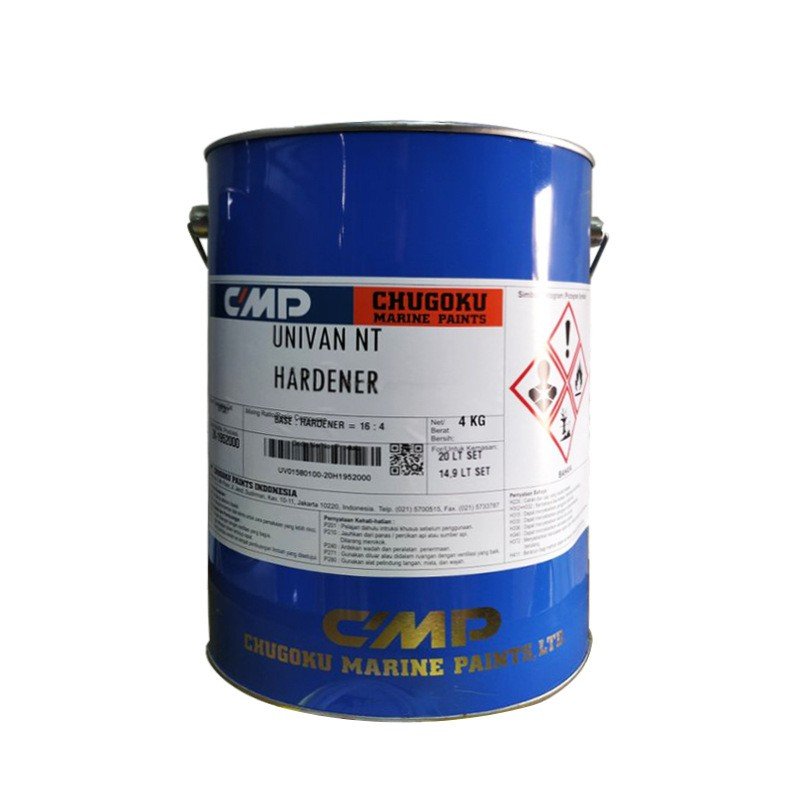
5084G BANNOH 3000 Epoxy Paint is an epoxy coating. It has good adhesion, a tough, abrasion-resistant film and many other physical properties, along with high flexibility, resistance to seawater corrosion and cathodic protection. Parameters on this page: volume solids 72 ± 2%; dry film thickness 100–250 µm; theoretical spreading rate 0.139–0.347 L/m². Comparable products from the same brand: 5006 ALP 500 Epoxy Paint, 5055 BANNOH 500 Epoxy Paint, 5055D BANNOH 500 AC Epoxy Paint.
Source: CMP original technical data sheet (TDS) '5084G BANNOH 3000 Epoxy Paint'. Spreading rate and other values converted from the TDS; for reference only.
The above content is compiled from the manufacturer's datasheet and this site's parameter tables. For selection, coating systems and lead times, pleaseContact Usfor confirmation.
This page carries the full TDS for this product, translated from the manufacturer's original document. No file download is needed; for an original-language copy, send an enquiry.
| Volume Solids | 72 ± 2% |
|---|---|
| Dry Film Thickness | 100–250 µm |
| Theoretical Spreading Rate | 0.139-0.347 L/m2 |
| VOC | 286 g/L |
| Density / Specific Gravity | 1.40 g/mL |
| Number of Components | Two-component |
| Thinner | EPOXY THINNER A |
| Mixing Ratio | Base : curing agent = 79:21 (by volume) |
| Colour / Appearance | ALG, ALB |
BANNOH 3000 is a multipurpose epoxy aluminium primer. It has good adhesion, a tough, abrasion-resistant film and many other physical properties, along with high flexibility, resistance to seawater corrosion and cathodic protection.
| Type | Epoxy |
|---|---|
| Use | May be used as an anticorrosive epoxy primer for steel structures, the exterior surfaces of tanks and the hull shell |
| Mixing Ratio | Base : curing agent = 79:21 (by volume) |
|---|---|
| Colour | ALG, ALB |
| Flash Point | Base 28 °C, curing agent 27.4 °C |
| Density | 1.40 g/mL |
| Volume Solids | 72 ± 2% |
| Volatile organic compound content | 286 g/L |
| Theoretical spreading rate | 0.139-0.347 L/m2 |
| Thickness | WFT 139–347 µm |
| Dry film | 100–250 µm |
(dry film 250 µm)
| Temperature | 0 °C | 10 °C | 20 °C | 30 °C | |
| Drying Time | Surface Dry | 20 h | 11 h | 4 h | 2.5 h |
| Hard Dry | 48 h | 19 h | 9 h | 5 h | |
| Recoat interval | At least | 48 h | 19 h | 9 h | 5 h |
| At most* | * | * | |||
| Pot life | 7 h | 5 h | 3 h | 1.5 h | |
| Application method | Airless spray, brush |
|---|---|
| Weather: temperature | Minimum 0 °C |
| Humidity | Maximum 85% RH |
| Airless spray: viscosity | 1.5-2.0Pa.s |
| Nozzle | Graco621, 623 |
| Paint output pressure | 14.7-17.7Mpa |
| Spray gun speed | 60–80 cm/s |
| Thinner | EPOXY THINNER A |
| Thinning | 0–10% by volume |
| Preceding coat | CERABOND 2000, EPICON ZINC RICH PRIMER B-2, EPICON ZINC HB-2 SH, among others |
| Subsequent coat | BANNOH 1500 N, UNYMARINE, EPICON FINISH HB, among others |
| Packaging | Two-component |
Note: 1. Consult the CMP sales department.
| 2 ALG | AL: aluminium-grey colours. ALB: aluminium-brown colours. |
|---|
3. To remove the volatilised solvent and promote film formation during application and film formation, ventilation is necessary.
4. Stir the base with an electric stirrer to a uniform state, then thoroughly stir all of the curing agent with the base. Finally add an appropriate amount of thinner and mix thoroughly.
5. Excessive thinner reduces the sag resistance and the physical properties of the film.
6. Density and VOC content are theoretical values calculated without thinner.
Information is subject to the manufacturer's latest version; the manufacturer's latest TDS prevails.
The technical parameters on this page are taken from the product's original manufacturer technical datasheet, the copyright of which belongs to the manufacturer. If a rights holder considers the presentation inappropriate, contact us for verification and handling.
For more Q&A on selection, application, acceptance and defect diagnosis, seeFAQsection.
Packaging specifications and batch lead times are subject to actual availability. PleaseContact Uscontact us for project-based calculation.