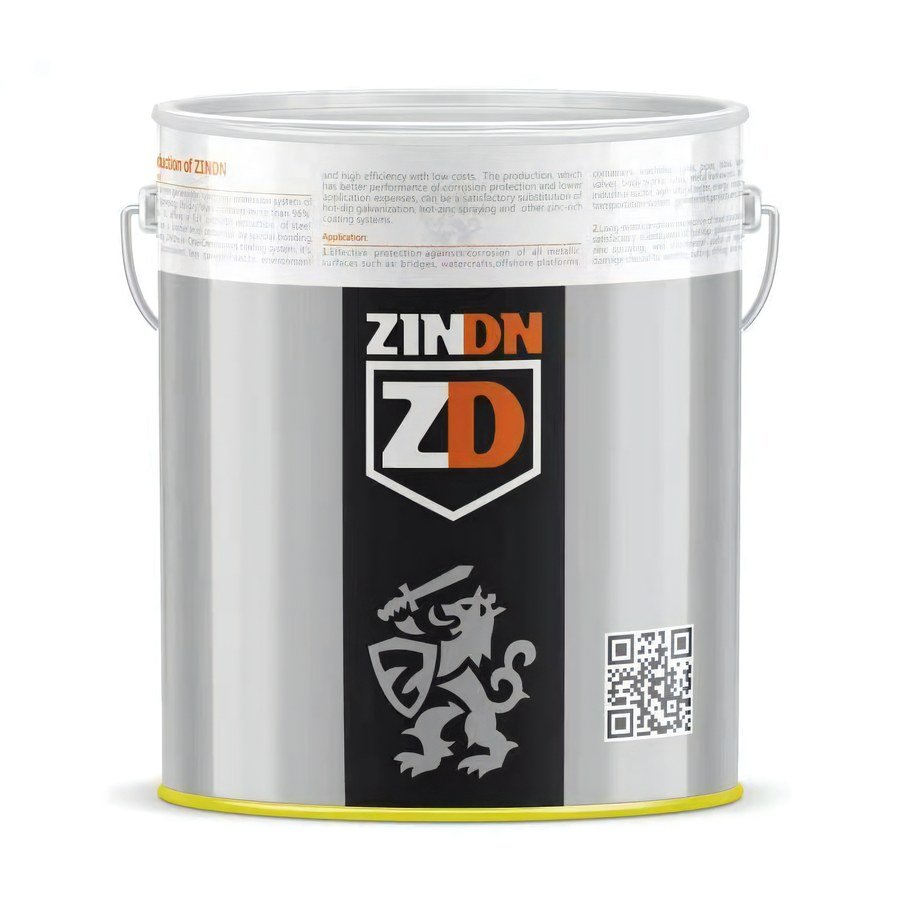
ZD6611 ZINDN Moisture-curing High-solids Glass Flake Epoxy Coating is an epoxy coating. Specifications on this page: volume solids 87 ± 3%, DFT 150-1000 µm, theoretical spreading rate 1.91 m2/L. Comparable products of the same brand and type: Epoxy Sealer ZD1040, Epoxy Resin Coating ZD1060, Epoxy Mastic ZD6311.
Parameter source: ZINDN original technical data sheet (TDS) for ZD6611 Zindn Moisture-Curing High-Solids Glass Flake Epoxy; spreading rate and other values are converted from TDS parameters and provided for product selection reference only.
The above content is compiled from the manufacturer's datasheet and this site's parameter tables. For selection, coating systems and lead times, pleaseContact Usfor confirmation.
This page carries the full TDS for this product, translated from the manufacturer's original document. No file download is needed; for an original-language copy, send an enquiry.
| Volume Solids | 87 ± 3% |
|---|---|
| Dry Film Thickness | 150–1000 µm |
| Theoretical Spreading Rate | 1.91 m²/L |
| VOC | 165 g/L |
| Density / Specific Gravity | Approx. 1.50 kg/L |
| Number of Components | Two-component |
| Thinner | X-500 Epoxy Thinner |
| Mixing Ratio | 4:1 (by volume) |
| Colour / Appearance | Grey, yellow and other possible colours |
ZD6611 Moisture-Curing Abrasion-Resistant Glass Flake Epoxy
A two-component ultra-high-solids polyamine adduct-cured moisture-curing glass flake epoxy.
| 1) Atmospheric protection | Corrosion protection for marine engineering and industrial protection such as bridges, petrochemical and utilities. |
|---|---|
| 2) Immersion environments | Marine engineering and industrial protection; |
3) Protection of cathodically protected structural components.
| Colour | Grey, yellow and other possible colours |
|---|---|
| Gloss | |
| Curing agent | H-6611 Moisture-Curing Abrasion-Resistant Glass Flake Epoxy Curing Agent |
| Volume Solids | 87±3% |
| Recommended dry film thickness | 150–1000 µm |
| Theoretical spreading rate (at 300 µm dry film) | 1.91 m²/L; 2.87 m²/kg |
| Volatile Organic Compounds (VOC) | 165 g/L |
| Density | Approx. 1.50 kg/L |
Drying data (600 µm dry film)
| Substrate Temperature | 5°C | 10°C | 20°C | 30°C |
| Touch dry | 14 h | 6 h | 4 h | 3 h |
| Hard dry | 30 h | 18 h | 10 h | 6 h |
| Fully cured | 18 days | 14 days | 5 days | |
| Pot life | 4 h | 2 h | 1.5 h | 1 h |
Overcoating data
| Substrate Temperature | 5°C | 10°C | 20°C | 30°C |
| Maximum overcoating interval (self) 30 days | 14 days | 10 days | 7 days |
| Mixing | Two components, mix uniformly by machine |
|---|---|
| Induction time | 10 min (temperature ≤ 10 °C) |
| Mixing Ratio | 4:1 (by volume) |
| 25.8 | 4.2 (by weight) |
| Thinner / Cleaning Solvent | X-500 Epoxy Thinner |
Airless Spray
| Tip size | 0.53-0.69mm |
|---|---|
| Nozzle pressure | 15-20MPa |
| Thinner ratio | 0-5% (by weight, according to application conditions and film thickness requirements) |
| Air spray | Suitable, but not recommended for large areas |
| Brush/roller | Suitable, for stripe coating and small-area touch-up only |
Application conditions
The substrate temperature should be above 0 °C and at least 3 °C above the air dew point. Temperature should be measured on the substrate near the work area; when applying in non-open spaces, good ventilation must be provided to ensure normal drying of the film.
Surface Preparation
The performance of the coating depends on the quality grade of surface preparation;
| Bare steel | Blast clean to Sa2 or Sa2½ of ISO 8501-1, with the blasted surface profile recommended to be 40–80 µm; high-pressure water jetting to WJ2/3L of SSPC VIS 4; disc grinding to St3; |
|---|---|
| Shop-primed steel | Light sweep blasting, or abrading rusted areas with a flexible disc to St3; |
| Areas burned by welding, flame cutting or fairing | Remove weld slag and spatter, grind smooth, then abrade with a flexible disc to St3; |
| Confirmed compatible previous coats | The surface shall be clean and dry, with all contamination removed; |
| Concrete | At least four weeks curing time; maximum humidity 5%; remove the mortar skin at the edges by manual blasting, diamond grinding and other suitable methods. |
| Damp surfaces | Remove visible water and other contaminants. |
Typical coating systems
ZD6430 polyurethane / ZD8680 fluorocarbon topcoat / ZD95-11 polysiloxane: 50-75 µm
| Immersion in water | ZD6611 Moisture-Curing Glass Flake Epoxy: 600-1200 µm. For further applications, consult Wuxi ZINDN. |
|---|
Packaging Specifications
| Component A | Weight packaging 25.8 kg | Volume packaging 16 L | Drum specification 20 L |
| Component B | 4.2 kg | 4 L | 5 L |
Shelf life
Store in a dedicated warehouse that is cool, dry, ventilated and away from sources of heat. The shelf life at room temperature is 12 months; thereafter it may be used only after passing inspection.
Supplementary notes
| Dry film (µm) | Wet film (µm) | Theoretical spreading rate (m²/L) | Theoretical spreading rate (m²/kg) |
| 150 | 174 | 5.73 | 3.82 |
| 300 | 349 | 2.87 | 1.91 |
| 600 | 698 | 1.44 | 0.96 |
| 1000 | 1163 | 0.86 | 0.57 |
Recoating interval of the coating (600 µm)
| The coating's subsequent | coating time interval | 0°C | 10°C | 20°C | 30°C | 40°C |
| coats | interval | |||||
| Self-recoat | Minimum recoat interval | 22 h | 10 h | 4.5 h | 2.5 h | 1.5 h |
| Maximum overcoating interval | 30 days | 28 days | 21 days | 14 days | ||
| various epoxies | Minimum recoat interval | 20 h | 8 h | 4 h | 2 h | 1.5 h |
| Maximum overcoating interval | 30 days | 14 days | 10 days | 7 days | 4 days | |
| polyurethane, fluorocarbon | Minimum recoat interval | 36 h | 20 h | 14 h | 10 h | 6 h |
| carbon coatings | interval | |||||
| Maximum overcoating interval | 30 days | 14 days | 10 days | 7 days | 4 days | |
| engineering polysilox | Minimum recoat interval | 32 h | 18 h | 12 h | 8 h | 4 h |
| ane | interval | |||||
| Maximum overcoating interval | 30 days | 21 days | 14 days | 10 days | 7 days | |
interval
| Notes | Before recoating, ensure the surface is clean, dry and free of all contaminants. |
|---|
Curing schedule of the coating (600 µm dry film)
| Substrate Temperature | Surface Dry | Hard dry | Fully cured |
| 0°C | 20 h | 40 h | 24 days |
| 5°C | 14 h | 30 h | 18 days |
| 10°C | 6 h | 18 h | 14 days |
| 20°C | 4 h | 10 h | 5 days |
| 30°C | 3 h | 6 h | 5 days |
| 40°C | 2 h | 3 h | 3 days |
- For dark-coloured coatings on dams and piles in tidal zones, if the completed coating is immersed in water prematurely while still wet, surface whitening may occur, but this will not materially affect the final anticorrosive performance of the coating.
- During application and curing, continuous and adequate ventilation must be ensured. Pot life after mixing (at suitable application viscosity)
| Temperature of the mixed paint | Pot life |
| 0°C | 4 h |
| 10°C | 2 h |
| 20°C | 1.5 h |
| 30°C | 1 h |
This product contains flammable materials; site safety must comply with the relevant national or local regulations. Read the safety labels on the packaging and the product Safety Data Sheet (MSDS).
Protective measures: fire prevention, explosion prevention and environmental protection. Use the product in a well-ventilated area. When working in confined or poorly ventilated spaces, provide forced ventilation.
Waste disposal must comply with the relevant national or local regulations.
The data and information in this data sheet are accumulated from our tests and practical experience and can be used as an application guide; however, since the use of the product is normally beyond our control, we provide only a guarantee of the quality of the product itself. The company reserves the right to modify without prior notice in line with continuous product improvement.
| Version information | Published on 30 August 2024; this data sheet supersedes all previous editions. |
|---|
Data is subject to the manufacturer's latest version; in all cases the manufacturer's latest TDS prevails.
For more Q&A on selection, application, acceptance and defect diagnosis, seeFAQsection.
Packaging specifications and batch lead times are subject to actual availability. PleaseContact Uscontact us for project-based calculation.