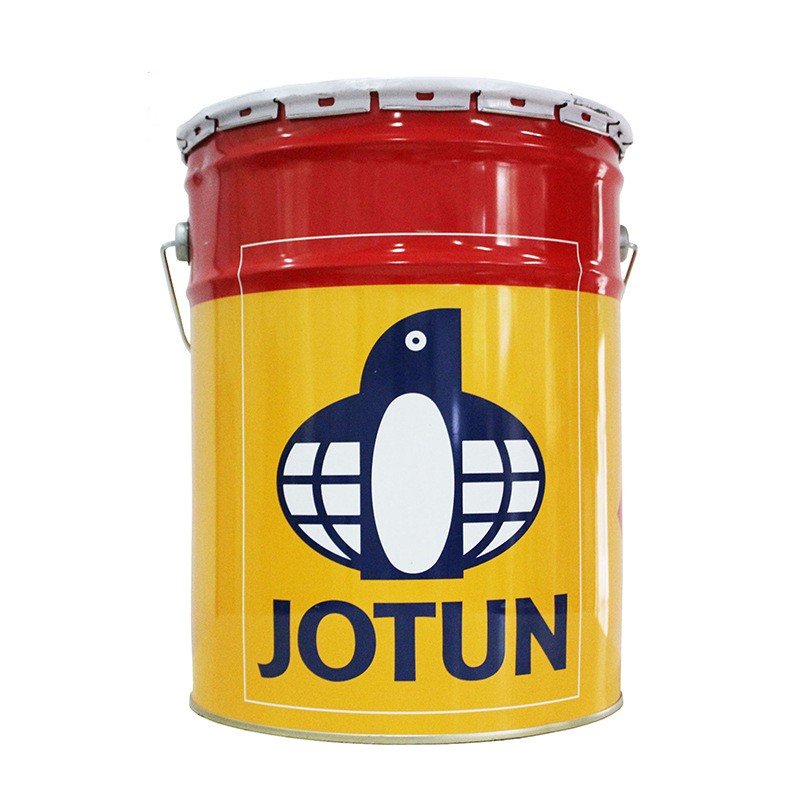
Marathon Abrasion-resistant Epoxy Glass Flake Coating is a glass flake coating in the epoxy coating system. Recommended for offshore environments such as refineries, power stations, bridges, buildings, mining equipment, and general structural steel. In atmospheric and immersed environments, it can be used as a primer, intermediate coat, topcoat, or single-coat system. Parameters on this page: volume solids 80 ± 2%, dry film thickness 200–400 µm, theoretical spreading rate 4–2 m²/L. Comparable products of the same brand and type: Jotacote Xtend GF Ultra-high Solids Abrasion-resistant Epoxy Glass Flake Coating, Jotamastic 87 GF Surface-tolerant Epoxy Abrasion-resistant Glass Flake Coating, Jotamastic 90 GF Surface-tolerant Epoxy Abrasion-resistant Glass Flake Coating 90.
Parameter source: JOTUN manufacturer's Technical Data Sheet (TDS) "Marathon Abrasion-resistant Epoxy Glass Flake Coating"; values such as spreading rate are converted from TDS parameters and are for product selection reference only.
The above content is compiled from the manufacturer's datasheet and this site's parameter tables. For selection, coating systems and lead times, pleaseContact Usfor confirmation.
This page carries the full TDS for this product, translated from the manufacturer's original document. No file download is needed; for an original-language copy, send an enquiry.
| Volume Solids | 80 ± 2% |
|---|---|
| Dry Film Thickness | 200–400 µm |
| Theoretical Spreading Rate | 4–2 m²/L |
| VOC | 134 g/L (China) |
| Density / Specific Gravity | 1.3 kg/L |
| Number of Components | Two-component |
| Flash Point | 30 °C |
| Thinner | JOTUN Thinner No. 17 |
| Mixing Ratio | 3 parts : 1 part (by volume) |
For more Q&A on selection, application, acceptance and defect diagnosis, seeFAQsection.
Marathon
This is a two-component polyamine-cured epoxy coating. It is a high-solids, glass-flake-reinforced, high-build product. It is abrasion-resistant and scratch-resistant. Suitable for highly corrosive environments. It can be used as a primer, intermediate coat, topcoat, or single-coat system in atmospheric and immersion environments. Suitable for properly prepared carbon steel and concrete substrates.
Marine coatings:
Particularly suitable for areas requiring high scratch resistance.
Industrial protective coatings:
Suitable for steel structures and pipelines in highly corrosive and immersion environments. Recommended for offshore environments such as refining and chemical plants, power stations, bridges, buildings, mining equipment, and general structural steel. Compatible with cathodic protection systems.
Others
APAS-certified to Standard 0213.
Pre-qualified in the selected coating system in accordance with NORSOK M-501. Other certificates and approvals are available on request.
Many other colours are available
| Property | Test / Standard | Description |
| Volume Solids | ISO 3233 | 80± 2 % |
| Gloss (GU 60°) | ISO 2813 | Gloss (70–85) |
| Flash Point | ISO 3679 Method 1 | 30 °C |
| Density | Theoretical Value | 1.3 kg/L |
| Region | Regulations | Test / Standard | VOC Value |
| US | CARB(SCM)2020 / SCAQMD rule 1113 | US EPA Method 24 | 210 g/L |
| Hong Kong | Air Pollution Control (VOC) Regulation | 210 g/L | |
| EU | European Paint Directive 2004/42/CE | Calculation | 248 g/L |
| China | GB 30981-2020 Limit of harmful substances of industrial protective coatings | GB/T 23985-2009 8.3 | 134 g/L |
The data listed are based on factory batch production and may vary slightly with colour.
| Gloss description | According to JOTUN's definition of functional coatings |
|---|
Typical recommended specification range
| Dry Film Thickness | 200–400 µm |
| Wet Film Thickness | 250–500 µm |
| Theoretical Spreading Rate | 4–2 m²/L |
Surface Preparation
| Substrate | Minimum | Recommended |
| Carbon Steel | Sa 2½ (ISO 8501-1) | |
| Coated surface | A clean, dry and sound compatible primer. | |
| Concrete | Curing time of at least 4 weeks. Maximum moisture 5%. Treat the surrounding concrete surface by closed-circuit blasting, diamond grinding and other suitable methods to remove laitance. | |
| Shop-primed Steel | Sa 2 (ISO 8501-1) | |
This product may be applied by the following methods
| Spray: | Apply by airless spray. |
| Brush: | Recommended for touch-up and small-area application. Take care to achieve the specified dry film thickness. |
| Abrasion-Resistant Epoxy Glass Flake, Component A | 3 parts |
| Abrasion-Resistant Epoxy Glass Flake, Component B | 1 part |
| Thinner | JOTUN Thinner No. 17 |
|---|
In China, the cleaning solvent must comply with GB 38508-2020
| Nozzle tip size (inch/1000): | 21-31 |
| Nozzle pressure (minimum): | 150 bar/2100 psi |
| Substrate Temperature | 10 °C | 23 °C | 40 °C |
| Touch Dry | 14 h | 5.5 h | 3 h |
| Walk-on Dry | 32 h | 12 h | 6 h |
| Minimum recoat interval | 32 h | 12 h | 6 h |
| Dry/cured to service | 14 days | 7 days | 3 days |
For the maximum recoat interval, refer to the Application Guide (AG) for this product.
Drying and curing times are determined based on temperature and relative humidity below 85%, with dry film thickness within the average range.
| Touch Dry | The state at which light finger pressure leaves no mark or stickiness. |
|---|---|
| Walk-on Dry | The minimum time after which the coating allows normal foot traffic without leaving permanent footprints, marks or other physical damage. |
Minimum recoat interval after drying: the recommended minimum interval before applying the next coat.
Dry/cured to service: the minimum time before the coating can be permanently exposed to a specific environment/medium.
| Paint temperature | 23 °C |
| Pot Life | 1 h |
Temperature
| Drying, atmospheric | Continuous 120 °C | Peak 120 °C |
| Immersed, sea water | 70 °C | 80 °C |
Withstands peak temperatures for a maximum of one hour.
At the above temperatures, protective performance is unaffected, but appearance may be affected.
Note: this coating can withstand different immersion temperatures, depending on the specific chemical and whether immersion is continuous or intermittent. Heat resistance is affected by the coating system as a whole. When used with other coatings, ensure that all coatings in the system have similar heat resistance.
Depending on the actual exposure conditions in service, this product may be used with various primers and topcoats. Some reference systems are listed below. For specific systems, contact JOTUN.
| Previous coat: | Epoxy, zinc-containing epoxy, inorganic zinc silicate |
| Subsequent coat: | Polyurethane, polysiloxane, epoxy, vinyl epoxy |
| Volume | Container Size | |
| (L) | ||
| Abrasion-Resistant Epoxy Glass Flake, Component A | 15 | 20 |
| Abrasion-Resistant Epoxy Glass Flake, Component B | 5 | |
The packaging sizes above are typical reference sizes for factory batch production. Due to regional regulatory differences, packaging sizes and capacities may vary by region.
Store in accordance with national regulations. Keep containers in a dry, cool, well-ventilated place away from heat and sources of ignition. Keep containers tightly closed. Handle with care.
| Abrasion-Resistant Epoxy Glass Flake, Component A | 48 months |
| Abrasion-Resistant Epoxy Glass Flake, Component B | 48 months |
In some markets, the stated shelf life may be shortened to comply with local legal requirements. The above is the minimum shelf life; thereafter, testing is required to confirm quality remains acceptable.
For professional use only. Applicators and workers must be trained, experienced, capable and equipped to mix, stir and apply the coating correctly in accordance with JOTUN's technical documents. Applicators and workers must wear appropriate personal protective equipment when using this product. This guidance is provided based on current product knowledge. Any proposed modification to suit site conditions must be approved by the responsible JOTUN representative before use.
Read the safety warnings on the container packaging. Use in well-ventilated conditions. Avoid inhaling spray mist and avoid skin contact. In case of accidental splashes on skin, wash immediately with a suitable cleaner, soap and water. In case of eye contact, rinse thoroughly with water and seek medical attention immediately.
When used primarily as a primer or antifouling coating, products may show slight colour variation from batch to batch. Such products, and epoxy products used as topcoats, may chalk when exposed to sunlight.
Gloss and colour retention of topcoats depend on the colour type, the surrounding environment such as temperature and UV intensity, application quality and product type. Contact your local JOTUN office for further information.
The information in this datasheet is based entirely on knowledge gained in our laboratory and in practice. JOTUN products are regarded as semi-finished products, and their use is generally beyond our control. JOTUN therefore guarantees only the quality of the product itself. To comply with local regulations, the product may be adjusted, and we reserve the right to modify the datasheet without further notice.
Users should consult JOTUN for specific guidance on the suitability of the product for their requirements and applications.
In case of any discrepancy between language versions, the English (UK) version shall prevail.
Information is subject to the manufacturer's latest version; the manufacturer's latest TDS prevails.
The technical parameters on this page are taken from the product's original manufacturer technical datasheet, the copyright of which belongs to the manufacturer. If a rights holder considers the presentation inappropriate, contact us for verification and handling.
Packaging specifications and batch lead times are subject to actual availability. PleaseContact Uscontact us for project-based calculation.