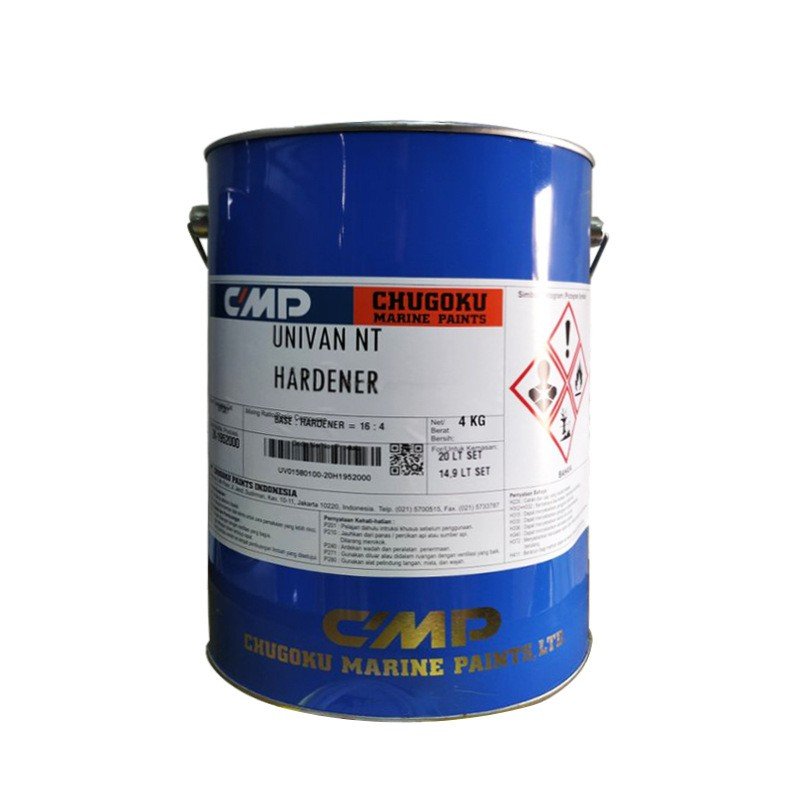
5844E SEAFLO NEO FLAT Z Tin-free Self-polishing Antifouling Paint belongs to Antifouling. SEAFLO NEO FLAT Z is a high-performance hydrolysing polymer-based antifouling paint with low organic volatile content, ensuring long-term antifouling performance, low frictional resistance and low energy consumption. Parameters on this page: volume solids 57 ± 2% (by volume), DFT 75–150 µm, theoretical spreading rate 0.132–0.263 L/m². Comparable models from the same brand: 4010B SEATENDER 7 Tin-free Self-polishing Antifouling Paint, 5843A SEAFLO NEO SL Tin-free Self-polishing Antifouling Paint, 5843H SEAFLO NEO SL Z Tin-free Self-polishing Antifouling Paint.
Parameter source: CMP original technical data sheet (TDS) "5844E SEAFLO NEO FLAT Z Tin-free Self-polishing Antifouling Paint"; values such as spreading rate are converted from TDS parameters and are for selection reference only.
The above content is compiled from the manufacturer's datasheet and this site's parameter tables. For selection, coating systems and lead times, pleaseContact Usfor confirmation.
This page carries the full TDS for this product, translated from the manufacturer's original document. No file download is needed; for an original-language copy, send an enquiry.
| Volume Solids | 57 ± 2% (by volume) |
|---|---|
| Dry Film Thickness | 75–150 µm |
| Theoretical Spreading Rate | 0.132-0.263 L/m2 |
| VOC | 380 g/L |
| Density / Specific Gravity | 2.13 g/ml |
| Number of Components | One-component |
| Flash Point | 26.0°C |
| Thinner | CR/ACRI THINNER A |
| Colour / Appearance | Red, light red |
SEAFLO NEO FLAT Z is a high-performance hydrolysing polymer-based antifouling paint with low organic volatile content, ensuring long-term antifouling performance, low frictional resistance and low energy consumption.
Compared with conventional hydrolysing paints, SEAFLO NEO FLAT Z has higher volume solids.
| Type | Tin-free self-polishing antifouling |
|---|---|
| Use | An antifouling specifically for the flat bottoms of steel vessels. |
| Colour | Red, light red |
|---|---|
| Flash Point | 26.0°C |
| Density | 2.13 g/ml |
| Volume Solids | 57 ± 2% (by volume) |
| Volatile organic compound content | 380 g/L |
| Theoretical spreading rate | 0.132-0.263 L/m2 |
| Thickness | WFT 132–263 µm, DFT 75–150 µm |
(dry film 100 µm)
| Temperature | -5 °C | 0 °C | 5 °C | 10 °C | 20 °C | 30 °C | |
| Drying Time | Surface Dry | 8 h | 5 h | 3 h | 2 h | 1 h | 30 min |
| Hard Dry | 24 h | 18 h | 12 h | 8 h | 5 h | 4 h | |
| Recoat interval | At least | 24 h | 18 h | 12 h | 8 h | 5 h | 4 h |
| At most | / | / | / | ||||
| Dry-to-launch time | Fastest | 52 h | 40 h | 28 h | 20 h | 14 h | 12 h |
| Application method | Airless spray, brush, roller |
|---|---|
| Weather: temperature | Minimum -5 °C |
| Humidity | Maximum 85% RH; steel temperature at least 3 °C above the dew point |
| Airless spray: viscosity | 1.5-2.5Pa·s |
| Nozzle | (Graco)619-723 |
| Paint output pressure | 11.7-14.7MPa |
| Spray gun speed | 60–80 cm/s |
| Thinner | CR/ACRI THINNER A |
| Thinning | 0–7% by volume |
| Preceding coat | BANNOH 1500 N, BANNOH 1500 S, BANNOH 500 N, BANNOH 500 R, BANNOH 500 S, SILVAX SQ-K, CMP-AC,BANNOH 1500 N Z, BANNOH 1500 S Z |
| Subsequent coat | - |
| Packaging | One-component |
Note: 1. Expected antifouling performance during berthing: consider the ship's operating conditions and the berthing environment, such as marine growth activity, pollution level and water temperature at the berth. For details, consult the local CMP office.
2. Maintain ventilation from application until full cure to remove residual solvent and promote curing.
3. Stir with a mixer until homogeneous, then add the appropriate thinner and mix.
4. Below 10 °C, additional thinner may be required to obtain a suitable application viscosity.
5. Excessive thinning, however, reduces sag resistance and film performance.
6. Slight colour change may occur after immersion and outdoor exposure.
7. Density, solids content and VOC content are theoretical calculated values of the formulation based on a typical colour (red) without added thinner. They vary with colour, production process and local regulations.
Information is subject to the manufacturer's latest version; the manufacturer's latest TDS prevails.
The technical parameters on this page are taken from the product's original manufacturer technical datasheet, the copyright of which belongs to the manufacturer. If a rights holder considers the presentation inappropriate, contact us for verification and handling.
For more Q&A on selection, application, acceptance and defect diagnosis, seeFAQsection.
Packaging specifications and batch lead times are subject to actual availability. PleaseContact Uscontact us for project-based calculation.