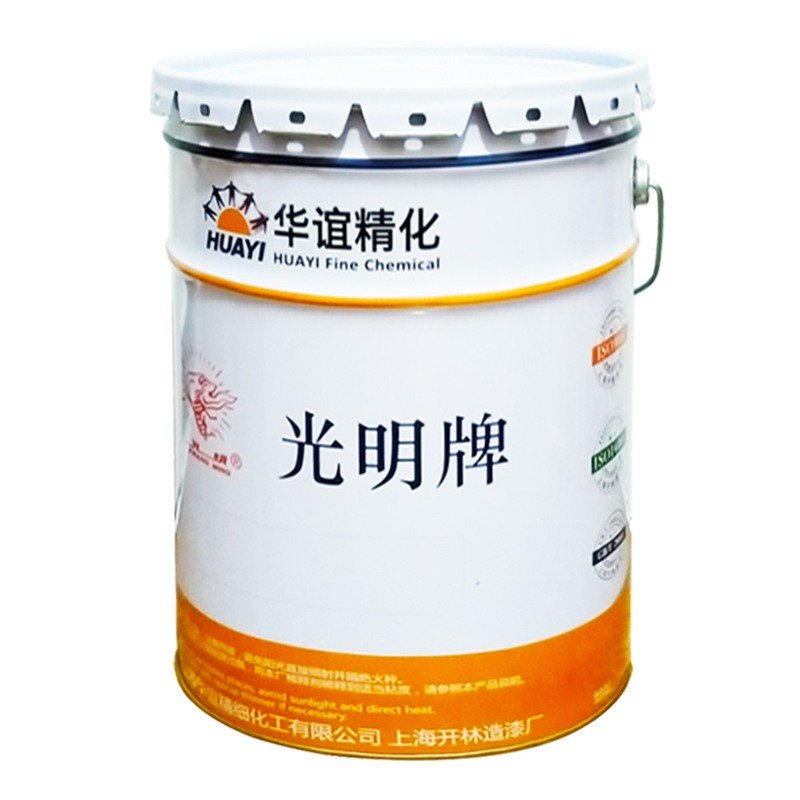
Long-life High-build Antifouling 839 is an antifouling. Suitable for use as an antifouling to prevent marine fouling organisms on marine facilities such as ship bottoms, wharves, offshore platforms, navigation marks and underwater steel gates. A high-performance long-life ship-bottom antifouling free of organotin antifoulants, composed of acrylic resin as binder, cuprous oxide as the main antifoulant and leaching aids. One airless-spray coat can achieve a dry film thickness of up to 100 µm; when the film thickness reaches the specified requirement, the antifouling effective period can reach three years or more. Parameters on this page: volume solids 56 ± 3%, dry film thickness 50–100 µm, theoretical spreading rate 196–392 g/m².
Source: KAILIN original technical data sheet (TDS) "Long-life High-build Antifouling 839"; spreading rate and other values are converted from TDS parameters and are for selection reference only.
The above content is compiled from the manufacturer's datasheet and this site's parameter tables. For selection, coating systems and lead times, pleaseContact Usfor confirmation.
This page carries the full TDS for this product, translated from the manufacturer's original document. No file download is needed; for an original-language copy, send an enquiry.
| Volume Solids | 56 ± 3% |
|---|---|
| Dry Film Thickness | 50-100µm |
| Theoretical Spreading Rate | 196-392 g/m² |
| VOC | — |
| Density / Specific Gravity | — |
| Number of Components | — |
| Flash Point | 28°C |
| Thinner | Thinner 102 |
| Colour / Appearance | Red-brown, matt |
For more Q&A on selection, application, acceptance and defect diagnosis, seeFAQsection.
Composed of acrylic resin as binder, cuprous oxide as the main antifoulant and leaching aids.
A high-performance long-life ship-bottom antifouling free of organotin antifoulants.
Long-term prevention of fouling of the ship bottom by marine fouling organisms such as barnacles, oysters, tube worms, bryozoans and algae, keeping the bottom clean and the speed unaffected
Easy to apply by airless spray, brush or roller. One airless-spray coat can achieve a dry film thickness of up to 100 µm
When the film thickness reaches the specified requirement, the antifouling effective period can reach three years or more
Suitable for use on marine facilities such as ship bottoms, wharves, offshore platforms, navigation marks and underwater steel gates to prevent marine
fouling by marine organisms.
| Appearance | Red-brown, matt. |
|---|
| Volume Solids | 56 ± 3% (determined per GB/T 9272 eqv ISO 3233:1998) |
|---|---|
| Dry Film Thickness | 50-100µm |
| Wet Film Thickness | 89-178µm |
| Theoretical quantity | 196-392g/m² |
| Flash Point | 28°C |
| Drying Time | |||
| Temperature | 5°C | 20°C | 30°C |
| Touch dry ≤ | 4h | 1.5h | 1 |
| Hard dry ≤ | 36h | 24h | 16h |
| Recoat interval | |||
| Temperature | 5°C | 20°C | 30°C |
| Minimum | 36h | 16h | 8h |
| Maximum | 15d | ||
The number of coats and dry film thickness of the antifouling depend on the dry-docking interval of the vessel
The number of coats or film thickness increases with the maintenance interval. Recommendations are as follows:
| Dry-docking interval | Newbuilding, dry film per coat | Refit, dry film per coat |
| (months) | thickness (µm) × number of coats | |
| 12 | 100×1 | |
| 24 | 100×2 | |
| 36 | 100×3 | |
[Note]: the recommended number of coats refers to airless spray. The film thickness per airless spray coat
Equivalent to two to three coats by brush or roller. When brushing or rolling, as long as the specified
film thickness is achieved, the number of coats is not limited by the recommended number.
| Preceding coat | 616 Chlorinated Rubber Iron-red High-build Anticorrosive (see the system table for the specific combination with anticorrosives) |
|---|
| Airless Spray | |
| Thinner | Thinner 102 |
| Thinning quantity | 0–5% (by paint weight) |
| Nozzle tip size | 0.4-0.5mm |
| Spray output pressure | 15–30 MPa (approx. 150–300 kg/cm²) |
| Roller/brush | Thinner 102, thinning 0–3% (by weight of paint) |
|---|---|
| Cleaning solvent | Thinner 102 |
| Safety measures | See the Safety Data Sheet (MSDS) of Shanghai Kailin Paint Factory. |
| Packaging | 10 L drum 21.5 kg |
| Shelf Life | 12 months. |
| (1) Film thickness and theoretical consumption | ||||
| Dry Film Thickness | (µm) | 100 | 250 | 300 |
| Theoretical consumption (g/m²) | 392 | 980 | 1176 | |
(2) Overcoating interval between the anticorrosive and the antifouling
Before applying the antifouling, the minimum drying time of the anticorrosive system is as follows:
| Temperature | 5°C | 20°C | 30°C |
| Chlorinated Rubber Anticorrosive | 24h | 12h | 8h |
| (3) Recoat interval and launching time of the antifouling | |||
| Temperature | 5°C | 20°C | 30°C |
| Minimum recoat time | 36h | 16h | 8h |
| Maximum recoat time | 15d | ||
| Minimum launching time | 36h | 24h | 16h |
| Maximum launching time | 15d | ||
(4) Vessels navigating in fresh water
Vessels navigating in fresh-water areas, or frequently travelling between seawater and fresh-water ports, where
the berthing time in seawater ports normally does not exceed 4 days, may omit the ship-bottom antifouling. (5) Refit
When the vessel enters dry dock, even if the bottom coating film is basically intact, the antifouling must not be applied directly
over the old film. Before applying the antifouling, wash the sludge and
salt off the bottom coating film with fresh water, then scrape off the marine fouling organisms attached to the film,
rust in corroded areas and loose old film; repair with two coats each of 615 Chlorinated Rubber Aluminium Anticorrosive and 616
Chlorinated Rubber Iron-red High-build Anticorrosive, then apply one full coat of 616 anticorrosive
to seal the old antifouling film. Then apply 2–3 coats of antifouling as required.
If the bottom coating film is largely destroyed, blast to bare metal and
re-coat the bottom anticorrosive and antifouling per newbuilding requirements.
| Notes | To use this product correctly, read the Application Guide in this data sheet carefully. |
|---|
The information and data for this product above are based on our tests and practical experience
and may be used as an application guide. For application carried out without our knowledge,
We guarantee only the quality of the paint itself; no responsibility is assumed for other aspects. This datasheet
may be revised by us as the product is continuously improved.
Information is subject to the manufacturer's latest version; the manufacturer's latest TDS prevails.
The technical parameters on this page are taken from the product's original manufacturer technical datasheet, the copyright of which belongs to the manufacturer. If a rights holder considers the presentation inappropriate, contact us for verification and handling.
Packaging specifications and batch lead times are subject to actual availability. PleaseContact Uscontact us for project-based calculation.