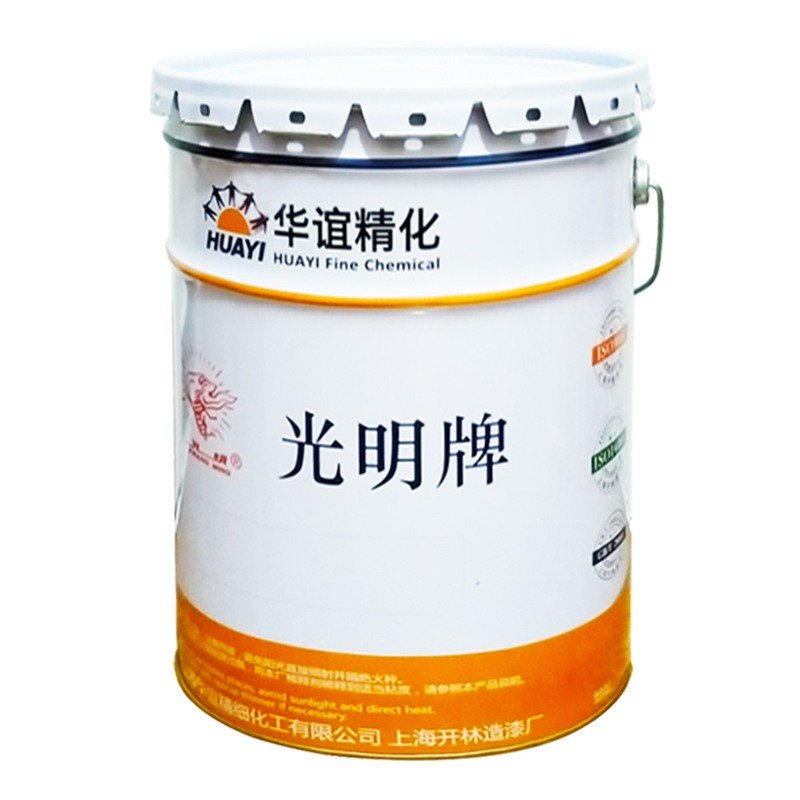
Bituminous Bottom Antifouling Paint 836 is an antifouling coating. Suitable for use as an antifouling paint on small and medium ships sailing in seawater, docks, etc., to prevent fouling of the bottom by marine organisms. An economical tin-free bottom antifouling paint composed of coal-tar pitch and rosin as binders, with cuprous oxide as the main antifouling agent and additives. Parameters on this page: volume solids 60 ± 3%; dry film thickness 50 µm; theoretical spreading rate 166 g/m².
Source: KAILIN original technical data sheet (TDS) 'Bituminous Bottom Antifouling Paint (Tin-free) 836'. Spreading rate and other values converted from the TDS; for reference only.
The above content is compiled from the manufacturer's datasheet and this site's parameter tables. For selection, coating systems and lead times, pleaseContact Usfor confirmation.
This page carries the full TDS for this product, translated from the manufacturer's original document. No file download is needed; for an original-language copy, send an enquiry.
| Volume Solids | 60 ± 3% |
|---|---|
| Dry Film Thickness | 50µm |
| Theoretical Spreading Rate | 166 g/m² |
| VOC | — |
| Density / Specific Gravity | — |
| Number of Components | — |
| Flash Point | 25°C |
| Thinner | Thinner 101 |
| Colour / Appearance | Red-grey, matt |
For more Q&A on selection, application, acceptance and defect diagnosis, seeFAQsection.
Composed of coal-tar pitch and rosin as binders, with cuprous oxide as the main antifouling agent and additives; an
economical tin-free bottom antifouling paint.
Effectively prevents fouling of the ship bottom by marine organisms such as barnacles, oysters, calcareous worms, bryozoans and algae for 1–1.5 years
A dissolving-type antifouling paint; as the antifouling agent in the film slowly leaches into the seawater, the antifouling paint
film also slowly dissolves, exposing fresh antifouling agent to continue leaching into the seawater
Easy to apply by airless spray, brush or roller
Effective antifouling is achieved when the film thickness meets the specified requirement
Suitable for small and medium ships sailing in seawater, docks, etc., to prevent fouling by marine organisms
of the ship bottom.
| Appearance | Red-grey, matt. |
|---|
| Volume Solids | 60 ± 3% (measured per GB/T 9272 eqv ISO 3233:1998) |
|---|---|
| Dry Film Thickness | 50µm |
| Wet Film Thickness | 83µm |
| Theoretical quantity | 166g/m² |
| Flash Point | 25°C |
| Drying Time | |||
| Temperature | 5°C | 20°C | 30°C |
| Touch dry ≤ | 4h | 2h | 1.5h |
| Hard dry ≤ | 36h | 24h | 16h |
| Recoat interval | |||
| Temperature | 5°C | 20°C | 30°C |
| Minimum | 24h | 16h | 12h |
| Maximum | 5d | 2d | |
The number of coats and dry film thickness of the antifouling depend on the dry-docking interval of the vessel
The number of coats or film thickness increases with longer maintenance intervals. Recommendations: newbuilding, old-ship repair
| Dry-docking interval | ||
| Dry film thickness per coat × number of coats | ||
| 12 months | 50µm×2 | |
| 18 months | 50µm×3 | |
[Note]: the recommended number of coats refers to airless spray. The film thickness per airless spray coat
Equivalent to two to three coats by brush or roller. With brush or roller, as long as the
specified film thickness is reached, the number of coats is not limited to the recommended number.
Can be used with L44-82(831) black-brown bituminous bottom anti-rust paint or 616 chlorinated rubber iron red high-build anti-
rust paint (see the compatibility table for specific pairing with anti-rust paints).
| Airless Spray | |
| Thinner | Thinner 101 |
| Thinning quantity | 0–5% (by paint weight) |
| Nozzle tip size | 0.4-0.5mm |
| Spray output pressure | 15–30 MPa (approx. 150–300 kg/cm²) |
| Roller/brush | Thinner 101; thinning quantity 0–3% (by paint weight) |
|---|---|
| Cleaning solvent | Thinner 101 |
| Safety measures | See the Safety Data Sheet (MSDS) of Shanghai Kailin Paint Factory. |
| Packaging | 19 kg in a 10 L drum |
| Shelf Life | 12 months. |
| (1) Film thickness and theoretical consumption | |||
| Dry film thickness (µm) | 50 | 100 | 150 |
| Theoretical consumption (g/m²) | 166 | 332 | 498 |
(2) Overcoating interval between the anticorrosive and the antifouling
Before applying 836 antifouling paint, the minimum drying time of the anti-rust paint system is as follows:
| Temperature | 5°C | 20°C | 30°C |
| Bituminous primer | 24h | 16h | 12h |
| Chlorinated Rubber Anticorrosive | 24h | 12h | 8h |
| (3) Pre-launch interval of 836 antifouling paint | |||
| Temperature | 5°C | 20°C | 30°C |
| Minimum launching time | 24h | 16h | 12h |
| Maximum launching time | 48h | 36h | |
In special cases the pre-launch time may be extended, but generally no more than 2 days in summer and no more
than 4 days in winter. (4) Vessels sailing in fresh water
Vessels sailing in fresh water areas, or frequently travelling between sea and fresh water ports where the sea port
berthing time normally does not exceed 4 days, need not apply bottom antifouling paint.
Information is subject to the manufacturer's latest version; the manufacturer's latest TDS prevails.
The technical parameters on this page are taken from the product's original manufacturer technical datasheet, the copyright of which belongs to the manufacturer. If a rights holder considers the presentation inappropriate, contact us for verification and handling.
Packaging specifications and batch lead times are subject to actual availability. PleaseContact Uscontact us for project-based calculation.