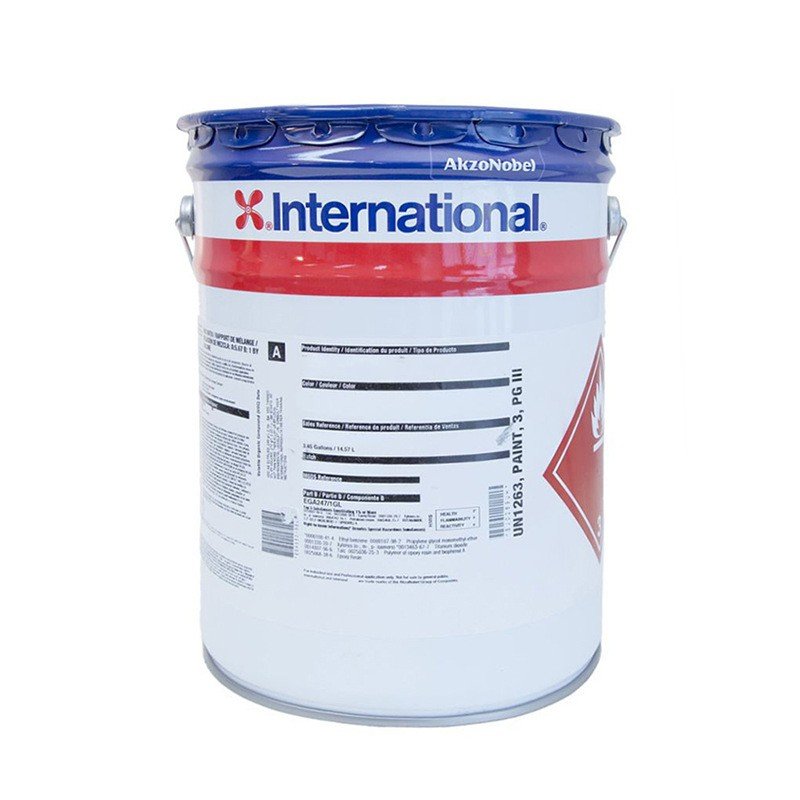
Interlac 789 Single-coat System is an alkyd coating used as a primer. Interlac 789 is designed as a single-coat system providing corrosion protection for steel structures, for applications where an attractive appearance is highly desirable, such as dry interior areas or low-corrosivity exterior environments. A one-component, fast-drying modified alkyd primer/topcoat designed as a single coat providing corrosion protection and decorative appearance. Because Interlac 789 is designed as a single-coat primer/topcoat, it is normally not applied as a multi-coat system, except for repair of mechanical damage and touch-up. Parameters on this page: volume solids 63% ± 3% (depending on colour), theoretical spreading rate 6.30 m²/L, number of components one.
Source: AkzoNobel original technical data sheet (TDS) "Interlac 789 Single-coat System"; spreading rate and other values are converted from TDS parameters and are for selection reference only.
The above content is compiled from the manufacturer's datasheet and this site's parameter tables. For selection, coating systems and lead times, pleaseContact Usfor confirmation.
This page carries the full TDS for this product, translated from the manufacturer's original document. No file download is needed; for an original-language copy, send an enquiry.
| Volume Solids | 63% ± 3% (depending on colour) |
|---|---|
| Dry Film Thickness | — |
| Theoretical Spreading Rate | 6.30 m²/L |
| VOC | 2.50 lb/gal (300 g/L) US EPA Method 24 202… |
| Density / Specific Gravity | 1.57 kg/L (13.1 lb/gal) |
| Number of Components | One-component |
| Flash Point | 31°C (88°F) |
| Thinner | Do not exceed the thinning limits of local environmental regulations |
| Mixing Ratio | N/A |
For more Q&A on selection, application, acceptance and defect diagnosis, seeFAQsection.
A one-component, fast-drying modified alkyd primer/topcoat designed as a single coat providing corrosion protection and decorative appearance.
Interlac 789 is designed as a single-coat system providing corrosion protection for steel structures, for applications where an attractive appearance is highly desirable, such as dry interior areas or low-corrosivity exterior environments.
Particularly suitable as a fast-drying general-purpose primer/topcoat, aimed at fully improving the productivity of fabricators.
789
| Gloss | Sheen |
|---|---|
| Volume Solids | 63% ± 3% (depending on colour) |
| Typical thickness | 100 µm (4 mil) dry film, equivalent to 159 µm (6.4 mil) wet film |
| Theoretical Spreading Rate | At 100 µm dry film thickness and the stated volume solids, 6.30 m²/L; at 4 mil dry film thickness and the stated volume solids, 253 ft²/US gal |
| Practical Spreading Rate | Allowing for a suitable loss factor |
| Application Methods | Suitable for airless spray, air spray, brush, roller. Drying time; recommended topcoat recoat interval |
| Temperature | Surface Dry | Hard Dry | Minimum | Maximum |
| 10°C (50°F) | 115 min | 5 h | 6 h¹ | Unlimited² |
| 15°C (59°F) | 105 min | 4.5 h | 5 h¹ | Unlimited² |
| 25°C (77°F) | 80 min | 4 h | 4 h¹ | Unlimited² |
| 40°C (104°F) | 60 min | 3 h | 2 h¹ | Unlimited² |
¹ The minimum recoat time applies to the recommended topcoat; when overcoating other topcoats, the minimum recoat time may be extended. Further information on the minimum recoat time is obtained from product characteristics and system compatibility.
² See the Definitions and Abbreviations of the International Paint Protective Coatings Division.
| Flash point (typical) | 31°C (88°F) |
|---|---|
| Product weight | 1.57 kg/L (13.1 lb/gal) |
| Volatile Organic Compounds | 2.50 lb/gal (300 g/L) US EPA Method 24. 202 g/kg. EU Solvent Emissions Directive (EU Council Directive 2010/75/EU). Coating hazards: GB 30981.2-S-Pb≤1000-NC. Complies with GB 30981.2-2025. For further details, see the "Product Characteristics" section. |
All surfaces to be coated must be clean, dry and free of contaminants. Before application, all surfaces must be assessed and prepared in accordance with ISO 8504:2019.
Oil and grease must be removed in accordance with the SSPC-SP1 solvent cleaning standard.
Blast cleaning: blast to Sa 2½ (ISO 8501-1:2007) or SSPC-SP6. If oxidation occurs between blasting and application of Interlac 789, re-blast to the specified visual standard. Surface defects exposed by the blasting process shall be ground, filled or treated in a suitable manner. Interlac 789 is suitable for application on surfaces blasted to the above standard, then naturally degraded for no more than 7–10 days under good workshop conditions. The surface quality may degrade to Sa 2, but must not develop loose powdery deposits.
| Mixing | This product is a single-component coating; stir thoroughly with a power mixer before each use |
|---|---|
| Mixing ratio | N/A |
| Suitable for airless spray | Recommended nozzle tip size 0.43–0.53 mm (17–21 thou); total paint pressure at the nozzle not less than 155 kg/cm² (2204 psi) |
| Air Spray | Recommended | Spray gun | DeVilbiss MBC or JGA |
| (with pressure pot) | Air nozzle | 704 or 765 | |
| Nozzle | E | ||
| Brush | Applicable — for small-area repair only | Typical thickness 50 µm (2.0 mil) | |
| Roller application | Applicable — for small-area repair only | Typical thickness 50 µm (2.0 mil) | |
| Thinner | International GTA007 | Do not exceed the thinning limits of local environmental regulations |
| Cleaner | International GTA007 |
|---|---|
| Interruption of work | Flush all equipment thoroughly with International GTA007. All unused paint shall be stored in tightly closed containers. Partially filled containers develop surface skinning and/or increased viscosity after storage. Strain the paint before use. |
| Cleaning | All equipment should be cleaned immediately after use with International thinner. Flushing spray equipment periodically during daily work is good practice. Cleaning frequency depends on the volume sprayed, temperature, spraying time, including delays, and other factors. |
All surplus paint and empty containers must be disposed of in accordance with the relevant local laws/regulations.
Interlac 789 is designed mainly for the protection of steel structures. Alkyd-based anticorrosive products are most suitable for protecting steel structures in dry interior environments, or in C1, C2 and C3 environments of ISO 12944, i.e. steel structures exposed to low-corrosivity environments.
Interlac 789 is available in a range of colours; however, as a characteristic of alkyd topcoats, alkyd topcoats undergo a degree of yellowing and chalking after a period outdoors, leading to loss of gloss and fading.
Because Interlac 789 is designed as a single-coat primer/topcoat, it is normally not applied as a multi-coat system, except for repair of mechanical damage and touch-up. The minimum recoat intervals of Interlac 789 with approved alkyd or oleoresinous topcoats are listed below. Using other topcoats may extend the minimum recoat interval and should be avoided.
Excessive film thickness and/or over-application of Interlac 789 extends the handling time, and extends drying and recoat times.
Premature exposure of Interlac 789 to standing water causes discolouration, which may be permanent. This only affects the surface appearance and does not affect the anti-corrosion performance of Interlac 789.
Interlac 789 is not designed for exposure to alkaline or acidic environments.
Interlac 789 must not be used in immersed environments.
Note: VOC values are typical and for guidance only. They may vary with colour and general production tolerances.
Interlac 789 is normally used as a single-coat anticorrosive primer/topcoat. Another decorative topcoat may also be applied over it.
Recommended topcoats are: Interlac 645, Interlac 658, Interlac 665. For more system compatibility advice, contact the International Paint Protective Coatings division.
| For further information on the industry standards, terms and abbreviations used in this datasheet, see www.international-pc.com | In the following documents on the website: • Definitions and abbreviations • Surface preparation • Coating application • Theoretical and practical spreading rate. These sections are also available as separate publications on request. |
|---|
This product must be applied at the production site by professional applicators in accordance with the recommendations in this manual, the Material Safety Data Sheet and the instructions on the container label. Do not use this product without first reviewing the Material Safety Data Sheet (MSDS) that International Paint provides for its customers.
All work related to the application and use of this product must be carried out in accordance with the relevant national health, safety and environmental standards and regulations.
If welding or flame cutting is required on metal coated with this product, dust and fumes will be generated; use appropriate personal protective equipment and adequate local ventilation.
If in doubt about the suitability of this product for the intended use, consult AkzoNobel for further advice.
| Packaging Specifications | ||
| Volume | Packaging | |
| 20 L | 20 L | |
| 5 L | 5 L |
For other packaging sizes, contact AkzoNobel.
Packaging Specifications
| 20 L | 33.1 kg |
|---|---|
| 5 L | 8.3 kg |
| Shelf life | Minimum 24 months at 25 °C (77 °F). Thereafter, inspection is required. Store in a dry, cool environment away from heat and sources of ignition. |
|---|
© 2026/5/26 AkzoNobel. All rights reserved.
All registered trademarks mentioned in this publication are licensed to or owned by AkzoNobel.
www.international-pc.com
Information is subject to the manufacturer's latest version; the manufacturer's latest TDS prevails.
The technical parameters on this page are taken from the product's original manufacturer technical datasheet, the copyright of which belongs to the manufacturer. If a rights holder considers the presentation inappropriate, contact us for verification and handling.
Packaging specifications and batch lead times are subject to actual availability. PleaseContact Uscontact us for project-based calculation.